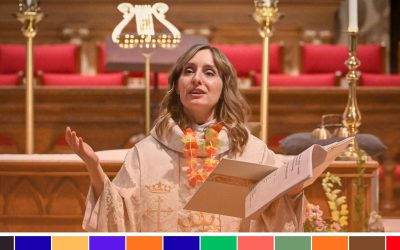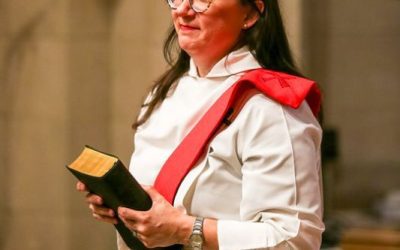


from Calvary Community Hour Spiritual Disciplines Series inspired by Richard Foster’s Celebration of Discipline
Years ago, when I was serving as an associate at a large church, I made a significant mistake. I had communicated poorly with one of the musicians on staff, and my failure created a painful situation.
The musician came into my office angry about what had happened. He did not yet know that I had played a part in it. He was so angry he stomped his foot a couple of times. I knew I had really messed up.
I could have explained. I could have defended myself or tried to spread the blame around. Instead, I simply told him the truth: I had made the mistake.
His anger immediately subsided. Tears welled up in his eyes.
He told me that he had never experienced a priest admitting that they had done something wrong.
He forgave me on the spot. Then I began the work of reconciling where I had gone wrong.
I will never forget the power of making that confession to him, a fellow believer in Christ: telling the truth can open a door that defensiveness keeps firmly shut. My confession did not erase what I had done, and forgiveness did not relieve me of the responsibility to make amends. But the truth allowed us to move out of anger and alienation and into the possibility of reconciliation.
More Than Feeling Better
We sometimes imagine confession as a religious exercise in feeling bad about ourselves. But in Richard Foster’s Celebration of Discipline, he writes, “At the heart of God is the desire to give and to forgive,”
“Because of this, he set into motion the entire redemptive process that culminated in the cross and was confirmed in the resurrection.”
Love brought Jesus to the cross. In Christ, God entered fully into the violence, fear, alienation, and sin of humankind so that all of it could be healed, forgiven, absorbed, and renewed.
This is what makes confession more than a therapeutic release. It certainly can bring psychological relief, but it also changes our relationship with God and begins a transforming work within us. As Foster says, salvation is both event and process. It is a process through which we are continually being healed, reconciled, and brought toward maturity in Christ.
The Reverend Carol Anderson once told the story of a parishioner who could not free himself from something he had done. He had a therapist. He had talked through the experience. Yet the memory of his sin still held him captive.
Eventually, the therapist suggested that he speak with a priest.
Carol invited him to make a formal confession. He named what he had done. She listened, offered counsel, and pronounced absolution. Afterward, the therapist observed that therapy alone could not have offered the particular release the man experienced through confession.
Therapy can help us understand ourselves, recognize patterns, and heal deep wounds. Confession does something distinct: it gives us a place to name sin as sin and to hear forgiveness declared to us. Sometimes we need more than the hope that God might forgive us. We need another human being to look at us, knowing the truth, and say, “You are forgiven.”
We Need One Another
Confession is both grace and discipline. Without God’s grace, genuine confession would not be possible. Yet it is also a discipline because it asks something of us: honesty, sorrow, and a willingness to change.
Confession is difficult partly because churches often present themselves as communities of saints rather than fellowships of sinners. We work hard to appear faithful, competent, and composed. We fear that if others knew the whole truth about us, we would no longer belong.
But Calvary’s vision calls us to remain “open to God’s grace, recognizing we are all broken saints and redeemed sinners.”
In proclaiming this vision, we believe we are opening ourselves to being an honest and authentic community willing to admit when we have fallen short and striving to live more fully in God’s love.
In the Gospel of John, the risen Jesus tells his followers, “If you forgive the sins of any, they are forgiven.” The authority to receive confession and proclaim forgiveness belongs to the community of Christ. We need another person because human beings are not meant to carry everything alone. In the Episcopal Church, we understand that we are part of the “priesthood of all believers” (1 Peter 2:5) and thus can hear confessions and pronounce forgiveness. Ordained priests are entrusted with the duty of granting absolution on behalf of the Church.
Dietrich Bonhoeffer wrote that when people confess only to themselves, their sin can remain in the dark. When they confess in the presence of another Christian, the sin is brought into the light, and they experience the presence of God through the reality of another person.
Richard Foster describes making such a confession to a trusted brother in Christ. He wrote down what he needed to confess from childhood, adolescence, and adulthood. His friend listened as Foster named it all. Then, when the confession was finished, the friend took the sheets of paper and tore them into shreds.
What a powerful image: the story was heard, the truth was faced, and the pages were destroyed. The sin no longer had to remain hidden, nor did it have the right to define him.
A Definite Ending Point
A good confession involves an examination of conscience. We invite God to search us and reveal the places in need of forgiveness and healing. We name concrete sins rather than hiding behind vague generalities.
It also involves sorrow—not necessarily a particular emotion, but a true recognition that our sin has wounded others and offended the heart of God.
Finally, confession includes the intention to amend our lives. We ask God to give us a desire for holy living and to help us turn away from what destroys life in us and around us.
But confession must also have a definite ending point. Otherwise, examination can become rumination, sorrow can become shame, and repentance can become endless self-condemnation.
Confession begins in sorrow, but it ends in joy.
It ends with forgiveness spoken aloud. It ends with the assurance that we are not alone and that our worst act is not the truest thing about us. It ends with the freedom to repair what can be repaired, accept what cannot be undone, and begin again.
Living Under the Cross
All Christians are technically granted authority to extend forgiveness one to another. Not everyone is prepared, however, to receive another person’s confession. A trustworthy confessor needs spiritual maturity, wisdom, compassion, common sense, and the ability to keep a confidence. A wholesome sense of humor helps, too. Some priests are able to offer this ministry well; some are not. Sometimes an ordinary Christian with no formal office is the person best equipped to listen.
The person receiving a confession must learn to live under the cross. When we recognize the gravity of our own sin and the abundance of the mercy we have received, we can hear the truth about another person without recoiling in horror or rushing to judgment. We can listen, pray, and place the cross between ourselves and the one who confesses.
That is why, at the conclusion of the Episcopal rite, the priest asks the penitent, “Pray for me, a sinner.” Priest and penitent stand together beneath the cross, the mercy of God.
Forgiveness does not return a relationship to what it was before. Once harm has occurred, there is no going back to the old “normal.” But through truth, forgiveness, repentance, and repair, a relationship may become deeper and more honest than it was before, perhaps even a hundred times better.
I return again to the musician standing in my office. When I decided not to explain and instead to confess, the situation changed. I opened the door to forgiveness. He granted it. And reconciliation was then possible.
This is the gift of confession: we recognize that we are sinners who have fallen short of the glory of God, but in confession and forgiveness, we are released from the chains of guilt and shame. Doors open to new possibilities.
And there, by the grace of God, sorrow gives way to joy.