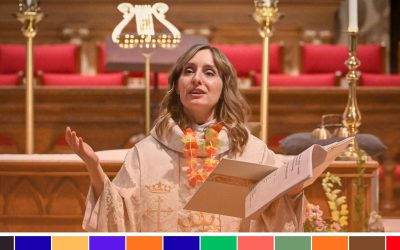

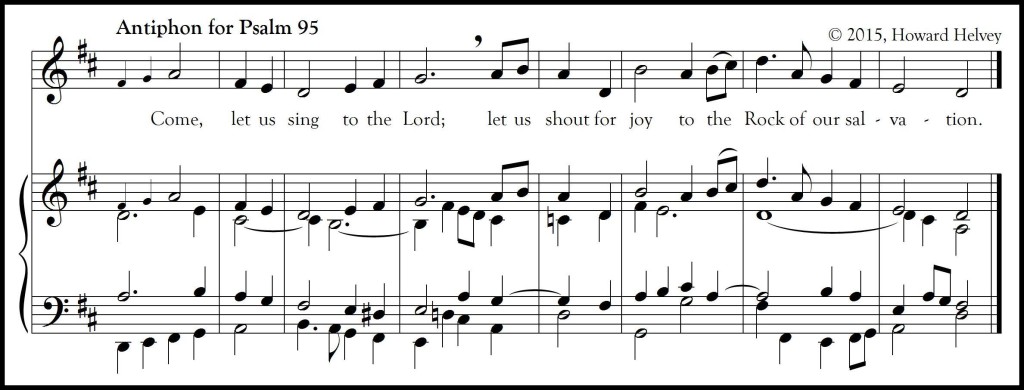
During the 11 AM service, we typically sing the appointed psalm to Anglican Chant, with a repeated Antiphon (or refrain) interspersed. Would you like to learn more about singing Anglican Chant with the Choir or Cantor? On Sunday at 10:50 AM, join me in the church to examine and rehearse the morning’s psalm. Click here for an excellent article on Anglican Chant, including color-coded instructions for singing!
The psalms, of course, can be read privately, recited either in personal prayer or public praise, but as Paul Westermeyer exclaims, “they cry out to be sung. Sung renditions have been their normal character from the beginning.” Calvary Church certainly needs no convincing of the joy and power of singing. In Westermeyer’s seminal book Te Deum: the Church and Music, however, he articulates several tangible reasons that show how the meaning and context of the psalms is elevated when they are voiced in song. For example, “singing, like nothing else, binds a corporate gathering. …Music also aids the memory. A text that has been sung will be remembered long after one spoken. …Music is also the means to interpret a text.”
Westermeyer additionally reminds us that our most powerful emotions of joy and sorrow cannot be adequately carried by words alone. Even the word “psalm” itself comes from the Greek word “psalmos” from, in turn, a Hebrew word (zmr or mizmor) meaning “to pluck,” as in plucking a stringed instrument. This would imply that the psalms originally were accompanied, at least in part, by a kind of psaltery or lyre.
It is often said that it is through the arts, including (of course) music and poetry, that humanity is able to most naturally embrace the intangible…the spiritual…the sacred. And it probably bears remembering that for many people, the brief weekly gathering for worship is their only regular exposure to poetry and song. The psalms can live in artful expression, and, far from being frozen in time, they can continue to speak to and through us today in our varieties of situations–pleasant, transitioning, and surprising. The way we sing them evolves, and hopefully, with the potency of our greatest ancestors, we will help voice the message of the psalms during our own time and into the future.